


Magic Beat: Anime Music Piano
Press Start Co., LTD.
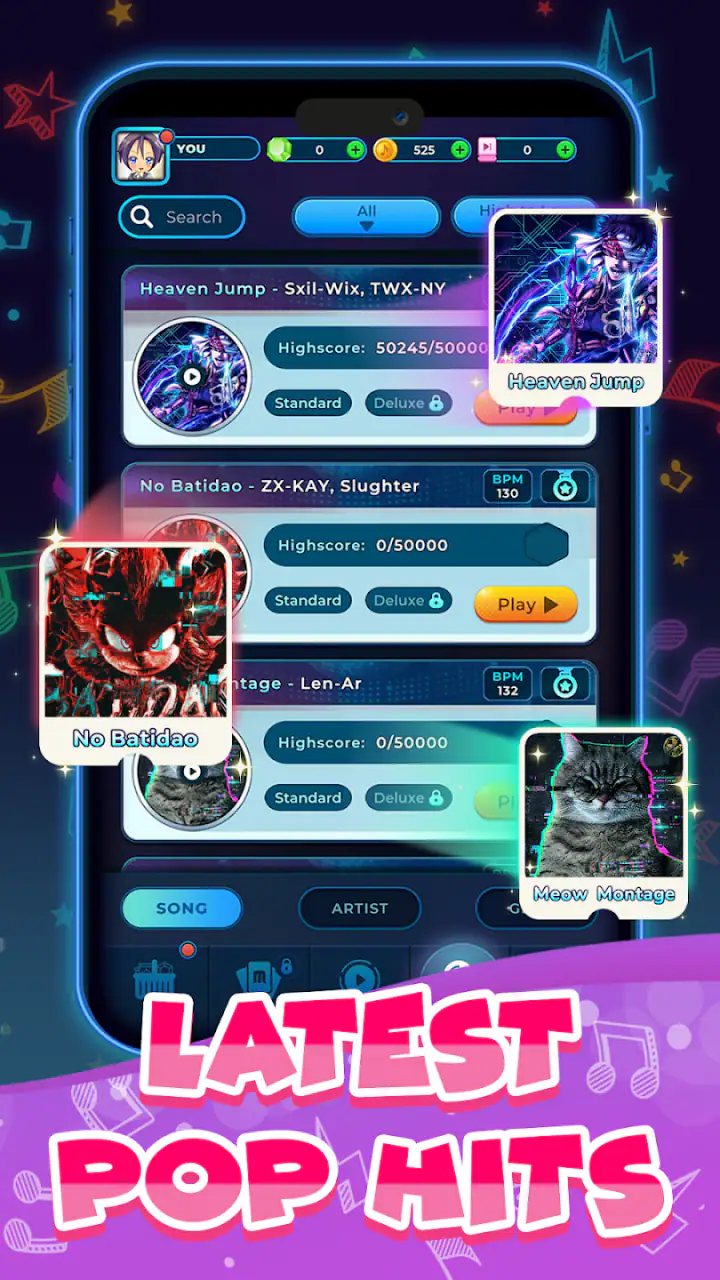
Magic Beat: Anime Music Piano immediately presents itself as a music game built around colorful anime idols, but its appeal is less about pretending to be a full rhythm simulator and more about creating a light, inviting performance mood. I found it easiest to enjoy when I treated each session as a short musical break rather than a serious test of technical skill. The presentation wants you to feel cheerful and involved from the first tap, while the piano-focused format keeps the basic interaction familiar.
That balance matters because music games can quickly become either too demanding or too shallow. This one sits in a friendlier middle ground. It gives casual players a clear reason to return, yet still asks for attention when the notes begin arriving more quickly. My overall impression is of a game designed to make rhythm feel approachable, especially for players who like anime-styled characters and want something less intimidating than a highly competitive arcade-style title.
How the visual world sets the mood
The art direction does much of the work in making the game recognizable. Its colorful anime-idol identity is not just decoration placed around a piano mechanic; it frames the entire experience as a small stage performance. The bright character designs and cheerful tone make the game feel more like joining a polished pop showcase than practicing an instrument. That distinction is important for younger players and for anyone who prefers warmth over intensity.
I also like the way this visual language lowers the barrier to entry. Before a player understands every part of the interface, the characters and colors communicate that the game is meant to be playful. There is no need to approach it with knowledge of music theory or rhythm-game terminology. You can simply watch the play area, listen, and start responding. The setting gives the taps a purpose: you are helping the performance continue rather than merely touching symbols on a screen.
The anime presentation will naturally appeal most to players who already enjoy idol-themed entertainment. If that style does not interest you, the game’s strongest identity may feel less meaningful, because the character atmosphere is a major part of the package. Someone looking for a plain piano trainer, a realistic keyboard experience, or a darker music-game presentation may find the visual direction too sugary.
Related News






One useful way to approach the art is to let it guide your session length. The bright presentation works well when you want a quick mood lift, such as during a break between tasks. It is not a game I would choose when I want a quiet, minimalist interface. The colors, performers, and musical framing are deliberately expressive, and that energy is central to the experience rather than an optional layer.
A setting that supports short sessions
In everyday use, I can imagine opening it while waiting for an appointment or taking a short break after studying. The game has the kind of immediate theme that does not require a long story recap before you can enjoy it. You can move from seeing the idol-focused presentation to playing a rhythm section without needing to prepare a complicated plan.
That makes it a good fit for a phone or tablet shared with casual players in a household. A family member can understand the basic idea quickly, while a more experienced rhythm-game player can still use timing as a personal challenge. The important trade-off is that the game’s welcoming presentation should not be mistaken for unlimited depth. Its charm gets you started; your willingness to repeat musical sections determines how long it holds your attention.
Gallery
Sound, timing, and the feeling of performance
The sound design is the part that gives the piano interaction its emotional weight. Without the music, tapping notes would feel like a simple visual exercise. With the music present, each successful input becomes part of a performance, and that makes even a short session feel more complete. I found the best experience came from paying attention to the beat instead of staring only at the next note.
That approach also reveals an important tip: do not begin by chasing speed. First, listen for the pulse and learn how the visual movement relates to it. Once the relationship between the notes and the music feels natural, accuracy becomes easier. This is especially helpful for players who usually react too early because they focus on the appearance of an incoming note rather than the moment it should be played.
The game’s colorful idol setting and musical structure complement each other well. The characters suggest performance, while the piano format gives the player a direct role in producing that performance. I prefer this combination to a rhythm game where the characters are merely background decoration. Here, the music is the reason the visual world exists, and the visual world gives the music a more personal context.
There is also a practical listening consideration. Rhythm games depend on a clear sense of timing, so noisy surroundings can make the experience less satisfying. If I were playing during a commute or in a busy room, I would expect to miss more inputs simply because environmental sound competes with the track. A quieter setting helps, not because the game is difficult to understand, but because rhythm is easier to follow when the beat is distinct.
Why the music changes the way the game feels
Music affects pacing more than the character artwork does. A lively section makes the game feel active even when the underlying input remains simple, while a calmer passage gives the player room to settle into the timing. This creates a useful rhythm between concentration and release. I would not describe the experience as relentlessly demanding; its appeal comes from alternating moments where I react quickly with moments where I can enjoy the performance.
For a player trying to improve, I recommend repeating a stage with a different goal each time. On the first attempt, concentrate on understanding the pattern. On the next, listen more closely and reduce rushed taps. After that, focus on maintaining a steady rhythm instead of panicking after one mistake. This method turns repetition into practice rather than mindless replay, and it suits the game’s accessible musical structure.
How the piano mechanic fits the audience
The central interaction is easy to understand: the player follows musical cues and taps in time, with the piano idea connecting those actions to the songs. That simplicity is a strength. A complicated control scheme would work against the game’s cheerful, immediate identity. I could hand it to someone unfamiliar with rhythm games and explain the basic objective without a long tutorial speech.
At the same time, simple controls do not automatically mean simple timing. The challenge comes from staying attentive, recognizing patterns, and keeping your hands calm when the pace increases. This is where the game can serve two audiences at once. New players can enjoy the fantasy of performing with anime idols, while experienced players can pursue cleaner timing and more consistent runs.
One of the better habits is to keep your tapping movement small. Large gestures feel satisfying at first, but they can make quick sequences less controlled. I found that a relaxed hand position and a stable device made it easier to respond without accidentally tapping late. This is a small adjustment, yet it makes a noticeable difference in a game where the input is straightforward and timing carries most of the challenge.
The piano theme also makes the game more approachable than rhythm titles built around dense lanes, complex combinations, or aggressive competitive systems. If you want a game that explains itself through one clear musical action, this is a sensible choice. If you want deep customization of controls, detailed instrument simulation, or a broad skill tree, a more specialized music game would probably suit you better.
Where the design may create friction
The same accessibility that makes the game welcoming can limit its long-term appeal for advanced players. Once you understand the basic timing language, you may begin looking for more variety in how the game asks you to play. Players who enjoy mastering elaborate patterns or comparing highly technical scores could eventually want a more demanding alternative.
There is also the matter of optional spending. The game is free to download and play, but in-app purchases range from $0.99 to $44.99 per item. That does not automatically make the experience poor, yet it is worth deciding in advance how you want to use the game. I would begin without buying anything, learn how much content and replay value I personally get, and only then consider whether an optional purchase improves my enjoyment.
This approach is particularly useful for parents. The content rating is Everyone, which makes the game broadly suitable in terms of age presentation, but the presence of in-app purchases still means a device’s purchase controls deserve attention. The age rating and spending question are separate issues. A child may be able to enjoy the game safely while still needing an adult-managed approach to optional transactions.
The current version is 1.3.4 and requires an operating system version of 10 or newer. In practical terms, I would check the device before recommending it to someone using an older phone or tablet. A game can be perfectly suitable in style and difficulty yet still be unavailable on hardware that does not meet that software requirement.
Who will enjoy it most in daily play
I would recommend this game first to casual music-game players, anime-idol fans, and people who want a colorful activity that can be understood quickly. It is also a good introduction for someone who has avoided rhythm games because they appear too technical. The piano framing gives the player an obvious connection between the tap and the music, while the character presentation keeps the experience friendly.
Imagine finishing a short study session and wanting something more active than scrolling but less demanding than a full console game. You open the app, play a musical section, and use the first run to settle into the beat. On the second run, you listen more carefully and try to keep your timing consistent. That is where the game makes sense: it turns a few spare minutes into a small performance routine without asking you to commit to a long campaign.
I would be more cautious about recommending it to someone who wants a serious replacement for piano practice. The piano theme does not make the game an instrument-learning tool. It can encourage attention to rhythm and timing, but it should be treated as entertainment rather than structured musical education. Likewise, competitive players who need robust ranking systems or highly technical note patterns may prefer a title built specifically around those priorities.
Its audience is also shaped by taste. The anime-idol style is a genuine advantage if you enjoy expressive characters and bright stage imagery. It can be a barrier if you prefer realistic visuals, subdued colors, or music games that put the track ahead of the performers. I would not ask someone to overlook that difference, because the setting is part of what gives this particular game its personality.
How it compares with familiar alternatives
Compared with a traditional piano app, this game is more playful and less educational. A piano simulator is better when your goal is to explore notes, chords, or freeform playing. Magic Beat is better when you want the game to tell you what to play and wrap that action in a character-driven performance.
Compared with a demanding arcade rhythm game, it feels more approachable and less intimidating. The colorful idol presentation invites beginners, and the piano concept is easier to grasp than a screen filled with multiple specialized lanes. The trade-off is that advanced players may find the interaction less expansive than in games designed around complex combinations and competitive mastery.
Compared with simply listening to anime music, it offers participation rather than passive entertainment. You are not only hearing a track; you are responding to it. That extra involvement makes the experience more satisfying when you want to stay engaged, though it also means the game requires attention instead of working as background entertainment.
The best comparison, then, depends on what you want from a music app. Choose this one for a cheerful, playable idol performance. Choose a piano-learning tool for instruction. Choose a harder rhythm title for technical depth. Choosing according to that difference will prevent the most common disappointment: expecting one category of experience from a game designed for another.
My atmosphere verdict after spending time with it
Press Start Co., LTD. has created a music game whose strongest achievement is coherence. The art, idol setting, piano interaction, and upbeat pacing all point in the same direction. None of those elements feels completely separate from the others. The game wants you to feel like you are helping a colorful performance happen, and the mechanics support that feeling without making the controls intimidating.
The scale of its audience is encouraging: it has passed 500K+ installs and holds a 4.5 average from around 980 ratings. Those figures suggest that the approachable presentation has found an audience, but they are not a reason to assume it will satisfy every rhythm-game fan. I would still judge it by your preferred level of challenge and by how much the anime-idol atmosphere appeals to you.
Because it is free, trying it is straightforward. I would recommend beginning with a short session, playing with sound in a reasonably quiet place, and resisting the urge to judge the game only by its first easy sequence. Give yourself time to understand how the visual cues sit against the beat. If the presentation makes you want to repeat a song and improve your timing, the game is doing its job.
My final view is positive but specific. This is best as a bright, accessible rhythm break, not as a full piano lesson or an endlessly technical competition. I would recommend it to a friend who likes anime idols, wants music to remain at the center of play, and appreciates a game that can be picked up without preparation. I would point a serious musician or high-level rhythm competitor elsewhere. For the right player, though, its cheerful art direction and responsive musical focus create a charming little stage that is easy to revisit.
FAQs for Magic Beat: Anime Music Piano
What is Magic Beat: Anime Music Piano?
Magic Beat: Anime Music Piano is a rhythm game centered on tapping piano-style tiles in time with music. It combines anime-inspired visuals, fast-paced note patterns, and a selection of songs designed for short play sessions. The main challenge is to maintain accuracy and rhythm while the tiles become faster and more demanding as you progress.
Is Magic Beat: Anime Music Piano free to download and play?
The game can generally be downloaded without an upfront payment, but availability of optional in-app purchases may depend on the version and platform. These purchases can include virtual items, extra content, or other gameplay-related benefits. Before confirming any transaction, check the store listing and the game’s payment settings, especially if children may use the device.
Does Magic Beat: Anime Music Piano require an internet connection?
Some parts of Magic Beat: Anime Music Piano may work offline after the necessary game data has been installed, which is convenient for playing while traveling or when mobile data is unavailable. However, features such as advertisements, updates, online rewards, cloud synchronization, or newly added songs may require an internet connection. Requirements can vary between versions.
Is Magic Beat: Anime Music Piano suitable for beginners?
Yes, the game is approachable for beginners because its basic control system is easy to understand: tap the notes as they reach the target area. Nevertheless, later stages can become considerably faster and require precise timing. New players should start with easier songs, practice maintaining a steady rhythm, and adjust the sound or visual settings if available.
What should I check before downloading the game?
Before downloading Magic Beat: Anime Music Piano, review the required storage space, supported Android or iOS version, and the permissions requested by the application. It is also worth checking recent user reviews for information about advertisements, performance, device compatibility, and purchase policies. If music licensing or regional availability matters to you, confirm the current song selection in your store listing.
Pros
- Simple tap controls make songs easy to pick up.
- Anime-inspired visuals create an appealing atmosphere.
- Short tracks work well for quick gaming sessions.
- Song difficulty offers a challenge for improving reflexes.
- Lightweight gameplay is suitable for casual mobile play.
Cons
- Fast notes can feel difficult on smaller phone screens.
- Some content may require in-app purchases to unlock.
- Repetitive tapping may become monotonous over longer sessions.
- Ads can interrupt the experience between songs.
- Performance may vary on older or less powerful devices.


